
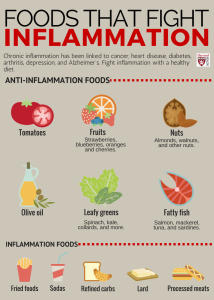
 One of the most powerful tools to combat inflammation comes from the grocery store. Choose the right anti-inflammatory foods, and you may be able to reduce your risk of illness. Consistently pick the wrong ones, and you could accelerate the inflammatory disease process.
What does an anti-inflammatory diet do? Your immune system becomes activated when your body recognizes anything that is foreign—such as an invading microbe, plant pollen, or chemical. This often triggers a process called inflammation. Intermittent bouts of inflammation directed at truly threatening invaders protect your health.
However, sometimes inflammation persists, day in and day out, even when you are not threatened by a foreign invader. That’s when inflammation can become your enemy. Many major diseases that plague us—including cancer, heart disease, diabetes, arthritis, depression, and Alzheimer’s—have been linked to chronic inflammation.
Anti-inflammatory diet
To reduce levels of inflammation, aim for an overall healthy diet. If you’re looking for an eating plan that closely follows the tenets of anti-inflammatory eating, consider the Mediterranean diet, which is high in fruits, vegetables, nuts, whole grains, fish, and healthy oils.
Anti-inflammatory foods
An anti-inflammatory diet should include these foods:
- tomatoes
- olive oil
- green leafy vegetables, such as spinach, kale, and collards
- nuts like almonds and walnuts
- fatty fish like salmon, mackerel, tuna, and sardines
- fruits such as strawberries, blueberries, cherries, and oranges
- spices, especially ginger, turmeric, and cayenne
- green tea contains antioxidant compounds known as catechins, which reduce inflammation
The health risks of inflammatory foods
Not surprisingly, the same foods on an inflammation diet are generally considered bad for our health, including sodas and refined carbohydrates, as well as red meat and processed meats.
Unhealthy foods also contribute to weight gain, which is itself a risk factor for inflammation. Yet in several studies, even after researchers took obesity into account, the link between foods and inflammation remained, which suggests weight gain isn’t the sole driver.
Foods that cause inflammation
Try to avoid or limit these foods as much as possible:
- refined carbohydrates, such as white bread and pastries
- French fries and other fried foods
- soda and other sugar-sweetened beverages
- red meat (burgers, steaks) and processed meat (hot dogs, sausage)
- margarine, shortening, and lard
In addition to lowering inflammation, a more natural, less processed diet can have noticeable effects on your physical and emotional health.
The impact of strength training
Strength training also improves chronic inflammation. Strength training’s positive effects on chronic inflammation are probably part of why it is shown to decrease the risk of heart disease and diabetes. To maximize your health gains, train with challenging weights and get adequate rest between your workouts.
Exercise regularly and recover completely. Exercise decreases levels of TNF (tumor necrosis factor) and CRP (C-reactive protein), both of which are involved in systemic inflammation. The key to reaping the benefits of exercise and avoiding chronic inflammation is making sure that you allow enough time for the body to recover after every strenuous session.
 Strength training is a great way to build muscle and see results more quickly than with other types of workouts. If you’re looking to jump-start muscle growth, beginning a new routine that challenges your muscles is key. You’ll probably feel shaky during those first few sets, but as the brain and body begin to adapt to your new exercise routine, you’ll gain strength as long as your training is consistent.
 There’s no skirting the fact that functional, full-body movements provide the most value for time and effort. Exercises like lunges and push-ups will always be more effective than exercises that isolate a single muscle — and for those of us with limited time, we owe it to ourselves to get the most out of each and every workout.
 WHAT DOES IT TAKE TO keep the lights on in the human body? How does the body power everything from blinking and cell repair to washing dishes and running a marathon?
 Like me, you might be soooo happy that your gym has reopened with COVID precautions in place – or maybe not. Not all gyms are the same and if you had been a member of a large gym, maybe you are not ready to return.
 If you know me, you know that I have been strength training since 2010. I made the decision to change my life, to feel better in my skin and in my clothes.
 So the COVID wagon has taken us on a bumpy ride over the last few months!
 A healthy body is home to a healthy mind. However, there are numerous different types of sports and a wide range of exercise and training. Which type and how much exercise will keep your mind in top shape?
 When it comes to